
Ever wondered how a simple phrase can ignite the gambler’s spirit? We delve into the fascinating world of motivational gambling quotes, exploring their psychological impact, linguistic tricks, and ethical considerations. Buckle up for a wild ride through the highs and lows of using quotes to fuel the thrill of the game, uncovering how words can shape our perceptions of risk, reward, and everything in between!
From analyzing the persuasive power of language and imagery to examining the ethical implications of using these quotes in marketing and support groups, we’ll dissect the complex relationship between motivation, gambling, and the power of suggestion. We’ll even look at how different demographics react to these motivational messages and the potential impact on health anxiety. Get ready to uncover the untold story behind the words that whisper promises of fortune and the potential pitfalls they may hide.
The Psychology of Gambling Quotes and Motivation
Motivational gambling quotes, while seemingly innocuous, can significantly influence a gambler’s risk-taking behavior by tapping into deep-seated psychological needs and desires. These quotes often act as powerful affirmations, reinforcing existing beliefs and potentially overriding rational decision-making processes. Understanding this psychological interplay is crucial for comprehending the addictive nature of gambling and the role of external influences in perpetuating the behavior.Motivational gambling quotes leverage various psychological mechanisms to influence behavior.
They often employ persuasive language that resonates with the gambler’s emotional state, creating a sense of empowerment or belonging. The impact of these quotes is further amplified by the context in which they are encountered, such as online forums or social media groups where gamblers share experiences and reinforce each other’s beliefs.
Motivational Quotes and Psychological Needs
Motivational gambling quotes frequently appeal to fundamental human needs. For example, quotes emphasizing achievement (“The thrill of victory is unmatched!”) tap into the need for accomplishment and self-esteem. Others focusing on belonging (“We’re all in this together!”) leverage the desire for social connection and acceptance within a community of gamblers. Quotes emphasizing power and control (“I am the master of my own destiny!”) cater to the need for autonomy and dominance.
The specific appeal varies depending on the individual gambler’s personality and psychological vulnerabilities.For instance, a quote like “Fortune favors the bold!” directly targets the need for achievement and risk-taking. It suggests that success is directly linked to daring actions, thereby encouraging bolder bets and potentially escalating gambling behavior. Conversely, a quote like “Luck is a matter of preparation meeting opportunity,” while seemingly positive, can also be interpreted as justification for continued gambling, implying that with enough effort (and more gambling), success is inevitable.
This highlights the subtle ways in which seemingly harmless motivational phrases can reinforce problematic behaviors.
Comparative Analysis of Positive and Negative Motivational Quotes
Positive motivational quotes, while potentially inspiring, can be equally problematic if they promote unrealistic expectations of success and downplay the inherent risks involved in gambling. For example, a quote like “You only lose if you quit!” can encourage persistence even in the face of significant losses, leading to increased financial and emotional distress. This quote focuses on the perseverance aspect, ignoring the crucial element of responsible risk management.Negative motivational quotes, on the other hand, often use fear and anxiety to motivate gamblers.
A quote like “Don’t let fear hold you back!” could push individuals to take risks they wouldn’t normally consider, escalating their gambling habits. While seemingly empowering, this approach can actually be counterproductive, leading to impulsive decisions driven by fear of missing out rather than sound judgment.The impact of both positive and negative motivational quotes depends heavily on the individual’s pre-existing vulnerabilities and psychological state.
A person already prone to risky behavior might be particularly susceptible to the allure of both types of quotes, while someone with a more cautious disposition might be less influenced. The context in which these quotes are presented also plays a significant role in their effectiveness.
Analyzing the Language of Motivational Gambling Quotes
Motivational gambling quotes, while often presented as inspirational, employ specific linguistic strategies to appeal to our desires and downplay the inherent risks. Understanding these techniques is crucial to critically evaluating their message and avoiding the pitfalls of manipulative language. This analysis will delve into the common linguistic patterns, persuasive techniques, metaphorical imagery, and framing of success and failure used to create these compelling – yet potentially misleading – statements.
The language of motivational gambling quotes frequently relies on a potent cocktail of positive reinforcement and aspirational imagery. They often tap into universal human desires for wealth, excitement, and control, leveraging these desires to create a compelling narrative that overshadows the potential downsides of gambling. This is achieved through a variety of techniques, which we will explore in detail.
Common Linguistic Patterns and Persuasive Techniques
Motivational gambling quotes frequently utilize powerful verbs and evocative adjectives to create a sense of urgency, excitement, and inevitability. Phrases like “seize the moment,” “take control of your destiny,” and “win big” are common examples. These phrases evoke strong emotional responses, bypassing rational thought and appealing directly to the gambler’s desires. Furthermore, the use of first-person pronouns like “you” and “your” creates a sense of personal connection and involvement, making the message feel more relevant and impactful.
The quotes often employ positive framing, focusing on potential gains while minimizing or ignoring potential losses. This selective presentation of information creates a biased and overly optimistic view of gambling. Consider, for instance, the difference between “You can achieve financial freedom” and “You might experience financial ruin.” The former is far more appealing, even if both statements are potentially true.
The Role of Metaphors and Imagery in Shaping Perception
Metaphors and vivid imagery play a significant role in shaping the perception of gambling within these motivational quotes. Gambling is often portrayed as a journey, a quest, or a battle. For example, a quote might describe beating the odds as “conquering a mountain” or “winning the ultimate prize.” This metaphorical language transforms the act of gambling from a risky financial venture into a heroic endeavor, imbuing it with a sense of purpose and adventure that masks the inherent risks.
The imagery employed often focuses on luxury, wealth, and success, creating a visually appealing narrative that distracts from the potential for devastating financial loss. Imagine a quote accompanied by a visual of a lavish lifestyle, contrasting sharply with the reality of many gamblers’ experiences.
Framing of Success and Failure
The framing of success and failure significantly influences how we interpret motivational gambling quotes. Success is typically portrayed as inevitable, achievable through skill, determination, or even luck. Quotes often emphasize the potential rewards, often exaggerating their likelihood, while minimizing or completely ignoring the possibility of failure. Conversely, failure is often downplayed, attributed to external factors, or framed as a temporary setback.
Instead of acknowledging the high probability of loss, the narrative often suggests that persistence is the key to ultimate victory. This selective presentation of outcomes creates a skewed perception of the reality of gambling, fostering an unrealistic sense of optimism and encouraging continued participation despite the significant risks. The contrast between the highly visible portrayal of success and the often-hidden reality of failure further reinforces this skewed perception.
The Ethical Considerations of Motivational Gambling Quotes
Motivational gambling quotes, while potentially inspiring to some, tread a fine line ethically. Their inherent ambiguity – celebrating risk-taking while ignoring the potential for devastating consequences – creates a significant risk of normalizing or even encouraging problem gambling behavior. This section explores the ethical complexities surrounding these quotes and proposes a framework for responsible use.The potential for harm stems from the seductive nature of such quotes.
Phrases emphasizing the thrill of the win or the importance of perseverance can resonate deeply with individuals already vulnerable to gambling addiction. This reinforcement, especially within marketing or advertising contexts, can inadvertently minimize the very real dangers of problem gambling, contributing to a harmful normalization of risky behavior. The focus on potential rewards, often presented without equal emphasis on the significant risks involved, creates an unbalanced and potentially deceptive narrative.
Potential for Normalization and Encouragement of Problem Gambling
Motivational gambling quotes frequently emphasize the excitement and potential rewards associated with gambling, often overlooking the significant risks involved. This selective framing can subtly normalize gambling as a positive activity, downplaying the potential for financial ruin, relationship breakdown, and mental health issues. For example, a quote like “Fortune favors the bold” can be interpreted by a vulnerable individual as justification for excessive gambling, neglecting the crucial element of responsible risk management.
The absence of balanced messaging, acknowledging both the potential wins and devastating losses, leaves a vulnerable audience exposed to the allure of gambling without the necessary awareness of the inherent dangers. This lack of context contributes significantly to the ethical concerns surrounding these quotes.
Framework for Evaluating Ethical Implications
A robust framework for evaluating the ethical implications of motivational gambling quotes in marketing and advertising requires a multi-faceted approach. This framework should assess:
- Target Audience: Identifying the intended audience is crucial. A quote targeting experienced gamblers might be less problematic than one directed at a younger, more impressionable audience.
- Context and Placement: The surrounding environment is paramount. A quote appearing alongside responsible gambling messages carries less risk than one used in isolation within a high-stakes advertising campaign.
- Message Framing: The language used is vital. Quotes that emphasize the potential for loss and the importance of responsible play mitigate ethical concerns significantly. Conversely, quotes solely focusing on winning and excitement raise serious ethical red flags.
- Overall Message: The entire marketing or advertising strategy must be considered. Does the campaign as a whole promote responsible gambling practices? Or does it primarily emphasize the excitement and potential rewards?
This framework allows for a comprehensive evaluation of the ethical implications, moving beyond a simple assessment of individual quotes to consider the broader context and impact.
Guidelines for Responsible Use of Motivational Gambling Quotes
The responsible use of motivational gambling quotes requires careful consideration of the potential impact on vulnerable individuals. A clear set of guidelines can minimize the risks:
- Avoid using motivational gambling quotes in marketing or advertising aimed at vulnerable populations. This includes young people, individuals with a history of gambling addiction, or those experiencing financial hardship.
- Always balance motivational quotes with clear and prominent messages promoting responsible gambling. This ensures that the positive aspects of gambling are not presented without acknowledging the associated risks.
- In support groups or recovery programs, use motivational quotes with extreme caution and only in conjunction with professional guidance. The context should always emphasize the importance of responsible gambling and the potential for harm.
- Focus on quotes that emphasize perseverance, resilience, and self-control rather than solely on the pursuit of financial gain. This shifts the focus from the potentially addictive aspect of winning to the development of healthier coping mechanisms.
- Prioritize transparency and avoid misleading or deceptive messaging. The true nature of gambling, including its risks and potential downsides, should always be clearly communicated.
These guidelines offer a practical approach to mitigating the ethical risks associated with the use of motivational gambling quotes in various contexts.
Gambling Quotes and Their Impact on Different Demographics
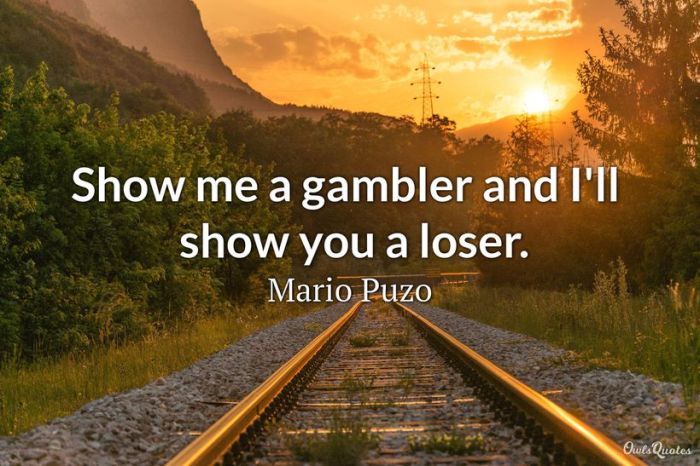
Motivational gambling quotes, while potentially inspiring to some, exert varying degrees of influence across different age groups and cultural backgrounds. Their effectiveness is not uniform, and understanding these nuances is crucial for responsible communication surrounding gambling. This section explores how demographic factors shape the reception and impact of such quotes.
Age Group Differences in Response to Motivational Gambling Quotes
The impact of motivational gambling quotes differs significantly across age groups. Younger individuals, particularly those in their late teens and early twenties, may be more susceptible to the allure of “get-rich-quick” narratives often embedded in these quotes. They may lack the life experience and financial literacy to fully grasp the inherent risks involved. Conversely, older individuals, with more established financial security and a longer perspective on life’s ups and downs, may find such quotes less appealing or even off-putting.
Their responses are often shaped by a more realistic understanding of probability and risk management. For example, a quote emphasizing “calculated risk” might resonate more with older adults than a quote promising instant wealth.
Cultural Influences on the Interpretation of Motivational Gambling Quotes
Cultural norms and beliefs significantly influence how motivational gambling quotes are perceived and interpreted. In cultures with a strong emphasis on collectivism, quotes that highlight teamwork or shared success within a gambling context might resonate more strongly. Individualistic cultures, on the other hand, may be more receptive to quotes that focus on personal achievement and self-reliance. Furthermore, cultural attitudes toward risk-taking and gambling itself play a crucial role.
Societies where gambling is more widely accepted and integrated into social life may view motivational gambling quotes more favorably than those where gambling carries significant social stigma. For instance, a quote about “fortune favoring the bold” might be interpreted positively in a culture that values risk-taking, while it might be seen negatively in a culture that prioritizes caution and stability.
Varied Responses to Motivational Gambling Quotes Across Demographics
The following table summarizes the varied responses to different types of motivational gambling quotes across different demographics. Note that these are general observations and individual responses can vary widely.
| Type of Motivational Quote | Response Across Demographics |
|---|---|
| “Fortune favors the bold.” | Young adults: Positive; Older adults: Mixed; Collectivist cultures: Less positive; Individualistic cultures: More positive. |
| “Calculated risk, calculated reward.” | Young adults: Moderate; Older adults: Positive; Collectivist cultures: Moderate; Individualistic cultures: Positive. |
| “The house always wins.” (used ironically as motivation to beat the odds) | Young adults: Moderate to Negative; Older adults: Negative; Collectivist cultures: Negative; Individualistic cultures: Moderate to Positive. |
| “Teamwork makes the dream work.” (in a gambling context, such as a poker team) | Young adults: Positive; Older adults: Positive; Collectivist cultures: Very Positive; Individualistic cultures: Moderate. |
The Relationship Between Gambling and Health Anxiety
The thrill of gambling, while potentially exciting, often walks hand-in-hand with significant stress and uncertainty. This inherent unpredictability can significantly exacerbate pre-existing health anxieties or even trigger new ones, creating a vicious cycle of worry and potentially harmful behaviors. The constant fear of loss, the pressure to win back losses, and the overall emotional rollercoaster can take a considerable toll on both mental and physical well-being.The link between gambling and health anxiety stems from the heightened state of arousal and uncertainty characteristic of gambling activities.
The unpredictable nature of outcomes fuels a constant state of anticipation and apprehension, leaving individuals in a perpetual state of hypervigilance. This constant mental strain can manifest in various ways, impacting not only mental health but also physical health.
Physical Manifestations of Gambling-Related Anxiety
The physical symptoms of anxiety related to gambling can be significant and debilitating. These often mirror the general symptoms of anxiety but are intensified by the specific stressors associated with gambling. Rapid heartbeat, shortness of breath, sweating, trembling, and digestive issues such as nausea or stomach upset are common. Chronic stress from gambling can also lead to muscle tension, headaches, and sleep disturbances, further impacting overall physical health.
For instance, a person might experience a panic attack after a significant loss, characterized by intense fear, chest pain, and dizziness. The prolonged stress can also weaken the immune system, making individuals more susceptible to illness.
Psychological Manifestations of Gambling-Related Anxiety
Beyond the physical symptoms, gambling-related anxiety manifests psychologically in several ways. Individuals might experience persistent worry and fear, often centered around financial ruin or the impact of their gambling on relationships. Intrusive thoughts about gambling losses, coupled with feelings of guilt and shame, are common. Difficulty concentrating, irritability, and feelings of hopelessness or worthlessness can also emerge.
Some individuals may develop avoidance behaviors, withdrawing from social activities or neglecting responsibilities to focus on gambling or avoid confronting the consequences. The constant worry can also lead to rumination, a cycle of repetitive negative thoughts that further fuels anxiety. For example, a gambler might repeatedly replay a losing streak in their mind, magnifying their feelings of failure and inadequacy.
Strategies for Managing Health Anxiety in Individuals Who Gamble
Addressing health anxiety in individuals who gamble requires a multifaceted approach that tackles both the gambling behavior and the anxiety itself. Cognitive Behavioral Therapy (CBT) is a particularly effective treatment, helping individuals identify and challenge negative thought patterns and develop coping mechanisms for stressful situations. Mindfulness techniques, such as meditation or deep breathing exercises, can help individuals manage anxiety in the moment and reduce the overall stress response.
Regular exercise and a healthy diet can also contribute significantly to reducing anxiety levels. Furthermore, support groups provide a safe space for individuals to share their experiences and learn from others facing similar challenges. Seeking professional help from a therapist or counselor specializing in addiction and anxiety is crucial for developing a personalized treatment plan. A combination of these strategies can significantly improve the well-being of individuals struggling with both gambling and health anxiety.
Visual Representation of Gambling Quotes and Their Emotional Impact
Motivational gambling quotes, while often intended to inspire, evoke a wide range of emotions. Understanding these emotional responses is crucial to analyzing their effectiveness and potential impact on individuals. Visual representations can powerfully communicate these nuances, making abstract feelings more concrete and accessible.Visualizing the emotional tone of motivational gambling quotes requires careful consideration of color, typography, and imagery.
The choice of these elements can significantly alter the perceived message and its emotional resonance.
Emotional Tones and Visual Correspondences
The emotional impact of gambling quotes varies greatly. Some quotes emphasize the thrill of the win, fostering excitement and exhilaration. Others focus on resilience and perseverance in the face of loss, promoting determination and hope. Still others might highlight the strategic thinking involved, conveying a sense of control and intellectual stimulation. These diverse emotions can be effectively represented visually.For example, a quote emphasizing the thrill of victory could be depicted using a vibrant, energetic color palette.
Imagine a background gradient shifting from fiery orange to bright yellow, suggesting the intense energy and excitement associated with winning. The quote itself could be rendered in a bold, sans-serif font like Impact or Bebas Neue, further amplifying the feeling of dynamism. Imagery might include stylized flames or upward-shooting lines, symbolizing the upward trajectory of success.In contrast, a quote focusing on resilience after a loss might employ a more subdued color palette.
Think deep blues and greens, representing calm and stability. The font could be a more refined serif typeface like Garamond or Times New Roman, suggesting maturity and wisdom. The visual accompaniment might feature an image of a sunrise or a sturdy oak tree, representing perseverance and enduring strength.A quote emphasizing strategic thinking could be presented with a cool, intellectual color scheme, perhaps using shades of gray, blue, and purple.
The font might be a clean, geometric sans-serif like Futura or Helvetica, reflecting precision and order. The accompanying imagery could be abstract geometric shapes or a complex network of lines, suggesting intricate planning and strategic foresight.These are just a few examples, and the specific visual choices would naturally depend on the exact wording and intended message of each individual quote.
The key is to create a visual harmony that accurately reflects the emotional tone conveyed by the words.
Case Studies
The following hypothetical case studies illustrate the diverse and sometimes unpredictable impact of motivational gambling quotes on individuals. It’s crucial to remember that these are examples and individual experiences can vary greatly depending on pre-existing vulnerabilities, personality traits, and the specific context of exposure. These examples are not intended to be exhaustive but rather to highlight the potential range of outcomes.
Exposure to motivational gambling quotes can have both positive and negative consequences, depending on individual circumstances and interpretation. While some may find inspiration and a renewed sense of determination, others might experience increased risk-taking behavior and a worsening of pre-existing gambling problems.
Case Study Examples: Impact of Motivational Gambling Quotes
| Individual Profile | Quote Exposure | Outcome | Analysis |
|---|---|---|---|
| Sarah, 32, successful businesswoman, occasional gambler with good self-control. Experiences occasional stress related to work. | Reads a quote emphasizing calculated risk-taking and strategic thinking in gambling. | Sarah applies the quote’s principles to her business ventures, leading to improved decision-making and increased profitability. Her gambling habits remain unchanged. | The quote’s message resonated with Sarah’s existing skills and mindset, leading to a positive outcome in an unrelated area. |
| Mark, 25, unemployed, struggling with gambling addiction and significant debt. He is prone to impulsive behavior. | Repeatedly exposed to quotes promoting “big wins” and “changing your life” through gambling. | Mark’s gambling intensifies, leading to increased debt and a worsening of his mental health. He experiences a significant decline in his overall well-being. | The quotes reinforced Mark’s existing addictive tendencies and provided a false sense of hope, exacerbating his problematic behavior. The focus on “big wins” ignored the overwhelming probability of loss. |
| David, 48, retired teacher, enjoys occasional low-stakes gambling with friends. He has a generally positive outlook on life. | Sees a quote emphasizing the thrill of the game and the importance of enjoying the process, not just the outcome. | David continues his low-stakes gambling, maintaining a healthy balance between enjoyment and responsible behavior. | The quote reinforced David’s existing healthy approach to gambling, focusing on the entertainment aspect rather than the potential for financial gain. |
| Emily, 28, student, experiencing financial stress and feelings of inadequacy. She is susceptible to external influences. | Exposed to numerous quotes emphasizing quick wealth and financial freedom through gambling. | Emily begins gambling more frequently and with higher stakes, hoping to solve her financial problems. This leads to significant debt and increased anxiety. | The quotes preyed on Emily’s vulnerabilities, offering a false solution to her real-life problems. The focus on quick wealth disregarded the inherent risks and potential for harm. |
Conclusive Thoughts
So, are motivational gambling quotes a force for good or a slippery slope? The answer, like a winning hand, is nuanced. While they can offer a boost of confidence for some, they can also inadvertently fuel problematic behavior in others. Understanding the psychology behind these quotes, their ethical implications, and their varied impact across demographics is crucial for responsible use and a more balanced perspective on the world of gambling.
Let’s gamble responsibly, both with our chips and our words!
Answers to Common Questions
What makes a gambling quote “motivational”?
A motivational gambling quote typically aims to inspire confidence, perseverance, or a belief in one’s ability to win, often focusing on themes of overcoming challenges and achieving success.
Can motivational gambling quotes be harmful?
Yes, they can be if they normalize or encourage excessive gambling, especially for individuals prone to problem gambling. The message needs to be carefully considered and responsibly presented.
Where can I find responsible examples of motivational gambling quotes?
Look for quotes that emphasize responsible gaming practices, financial awareness, and the importance of setting limits. Avoid quotes that solely focus on winning without acknowledging the risks involved.
Are there any legal restrictions on using motivational gambling quotes in advertising?
Legal restrictions vary widely depending on location and the specific context of the advertisement. It’s crucial to consult relevant gambling regulations and advertising standards in your jurisdiction.


